

A stabbing attack undoubtedly poses one of the most critical and lethal threats to law enforcement agencies. The proximity of the assailant, the unpredictability of the weapon’s movement, and the speed at which this type of attack occurs create a high-risk scenario in which protecting vital areas is the determining factor between life and death. This vulnerability demands rigorous tactics and thorough preparation.
In order to develop effective defensive strategies, it is important to understand the anatomy and vulnerability of the most critical areas. The areas most susceptible to injury that could prove fatal include:
The cervical region (neck and throat) contains the trachea, oesophagus, carotid arteries and jugular veins. An incision or puncture to this area can compromise the airway, cause neurogenic shock, or result in haemorrhaging within seconds.
The chest houses the heart and lungs. Penetrating injuries to this area can cause pneumothorax, haemothorax or cardiac damage.
The abdomen contains vital organs, and abdominal injuries can lead to internal bleeding.
The inguinal and femoral regions include the femoral artery and vein. A deep cut in this area can lead to significant arterial or venous bleeding.
Therefore, the tactical priority should be to minimise exposure to these areas through displacement techniques, the proactive use of barriers, and the strategic use of personal protective equipment.

The response to a stabbing attack must be multifaceted and integrate principles of distance, control and protection.
It is essential to prevent the attacker from approaching. Greater distance provides more time to react and use defence measures or the regulation weapon, if necessary.
If you lose your distance and the attacker becomes aggressive, your immediate priority is to control and deflect the trajectory of the weapon. This involves making specific blocking and redirection movements with the upper limbs (particularly the forearms), using them as barriers. The aim of these techniques is to move the weapon away from vital areas of the agent’s body, thereby gaining critical seconds for neutralisation or the application of disarming and control techniques. Training in defensive martial arts and hand-to-hand combat systems adapted for police work is therefore essential.
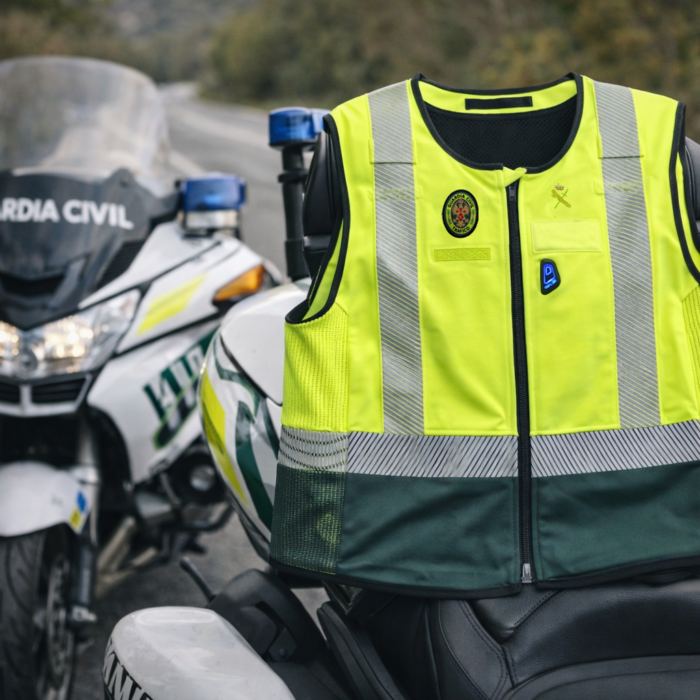
The cut-and-ballistic vest significantly reduces the risk of fatal injuries, particularly to the torso and abdomen. Regular use during service can save lives.
Breaking the attacker’s line of attack involves constant movement and changing angles, which hinder his accuracy and reduce the exposed body surface area.
Constant training in police self-defence techniques and stress simulations strengthens the capacity to respond. In addition, psychological preparation is essential to managing fear and remaining calm in order to apply the learned techniques effectively.
Ultimately, protecting vital areas during a stabbing attack is not only a matter of individual survival, but also ensures your ability to protect the public.